Siemens Healthineers believes that partnerships and training programs can help address the global shortage of healthcare workers and strengthen health systems. The company knows that collaboration and continuous learning can support a more resilient future of care.
Working for Siemens Healthineers can be very rewarding - Pioneering breakthroughs in healthcare, for everyone, everywhere, sustainably.
Let's hear from Shelley Pascual [pictured below] who writes about this topic. Shelley works as an editor at Siemens Healthineers, specializing in addressing healthcare access topics.
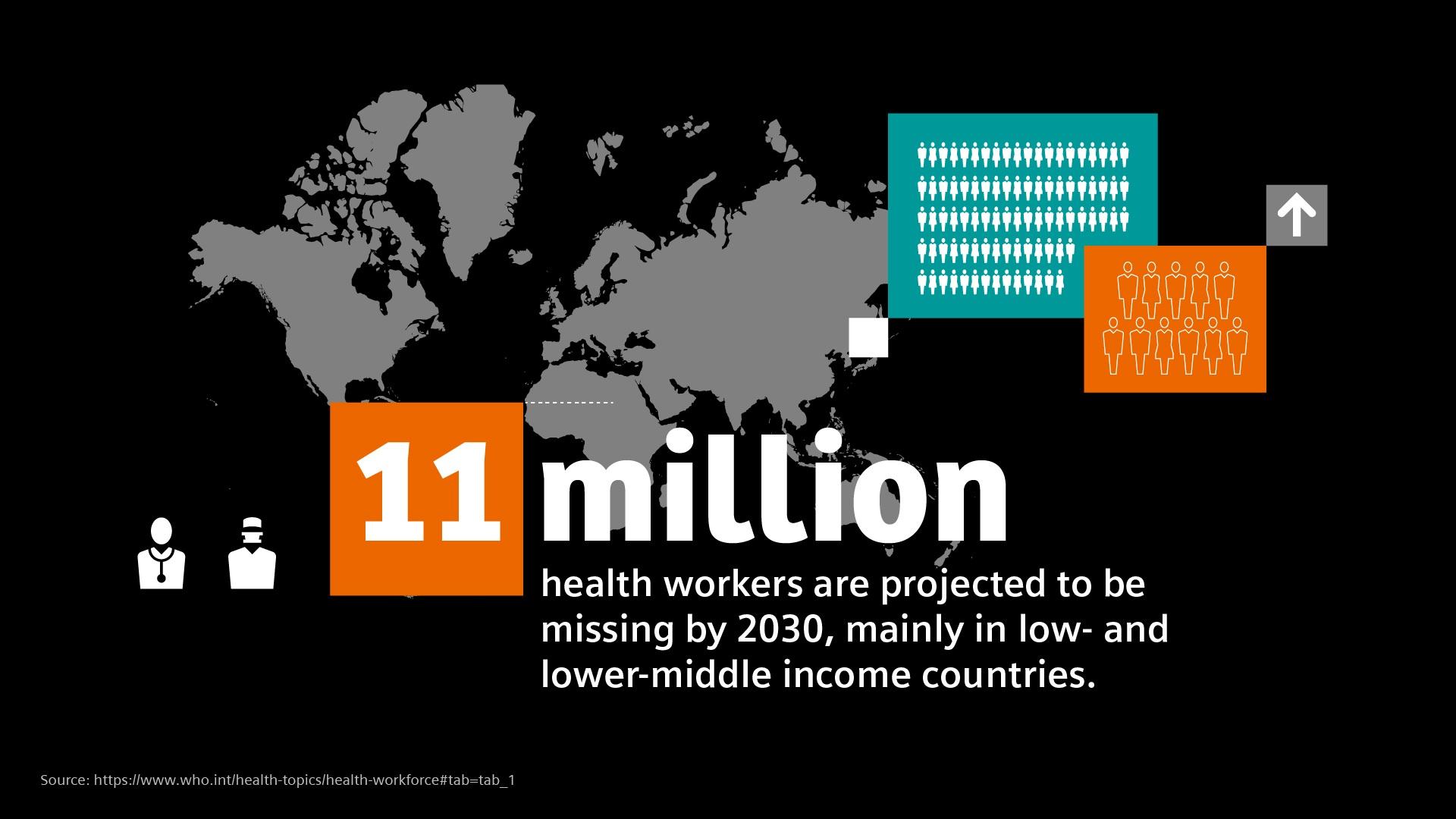
"A global shortage of healthcare workers is leaving billions without access to care. Growing populations, rising life expectancy, and the increasing burden of both communicable and noncommunicable diseases are stretching health systems worldwide. Partnerships and training programs are closing the gap and building resilient health systems from Indonesia to Ukraine," says Shelley.
"People in emerging markets – as well as those in rural or underserved areas in developed nations – often struggle to obtain even basic services. This can be due to barriers such as distance, inadequate infrastructure, or financial constraints. The global shortage of skilled healthcare workers is contributing further to this challenge. How can capacity building help to elevate health outcomes? What role do onsite training centers play in times of online learning? What does effective upskilling look like in practice?" asks Shelley.
In her insightful article, Shelley explores how collaboration and continuous learning can support a more resilient future of care.

Combining forces for greater impact
Shelley cites insightful comments from her Siemens Healthineers colleague, Hagen Weissapfel, who works as the Head of Capacity Building for Emerging Markets: “Transforming healthcare ecosystems requires long-term partners, not one-time transactions. We invest in elevating health over decades – building clinical capabilities, expanding access, and ensuring customer success. Through trusted collaboration, we grow with healthcare systems to improve outcomes in each country's unique context."
Shelley references a Siemens Healthineers initiative that, expanding on a 30-year partnership with the American Society of Radiologic Technologists (ASRT), introduces high-quality training for radiologic technologists and radiographers to underserved countries worldwide. Training these professionals to operate imaging and radiation therapy equipment is vital for diagnosing and treating serious conditions such as cancer and cardiovascular disease.
In the article, ASRT Executive Vice President of Member Engagement Melissa Culp highlights that Siemens Healthineers is co-creating content tailored to country-specific needs: “Trust and relationships are key for the success of any partnership. Our first project site is in Ukraine."
With local know-how from Siemens Healthineers and ASRT’s educational expertise, Siemens Healthineers developed a curriculum to train 120 Ukrainian radiographers through in-person and online sessions. Partnering with the German Agency for International Cooperation and Ukraine’s Ministry of Health, the program equips frontline professionals whose skills ensure patient access to essential diagnostic care. By standardizing curricula aligned with modern medical equipment and imaging processes nationwide, the initiative strengthens Ukraine’s healthcare system and long-term resilience.
Training centers as essential hubs
Shelley includes further supporting evidence from colleague Hagen Weissapfel regarding the importance of hubs: “Physical training centers bring people together as essential hubs where learners build relationships, exchange ideas, and create meaningful connections in hybrid learning."
Shelley adds how Siemens Healthineers Egypt academy demonstrates this impact. Since 2018, over 3,000 healthcare professionals from 20 countries have built capabilities that elevated their local health ecosystems.
“By blending onsite immersive training with digital follow-up, we create scalable expertise networks that make customers clinically and operationally successful,” explains Hagen.
"From Poland to the Philippines, Siemens Healthineers global training centers are helping build a skilled healthcare workforce. In Jakarta, Indonesia, the newly inaugurated Cardiac Care Training Center (CCTC) features 11 advanced digital imaging workstations and direct access to various imaging systems within the clinical setting of the Harapan Kita National Heart Center. The center is expected to train over 9,500 healthcare professionals annually and connect with more than 560 referral hospitals across Indonesia’s archipelago - strengthening local expertise and supporting scalable, high-impact training," adds Shelley.
Upskilling to transform patient care
For another example of upskilling, Hagen points to the Siemens Healthineers partnership with the Global Surgery Foundation (GSF) to create free online courses on its SURGhub platform. These modules, which now form part of SURGhub’s growing catalogue of over 100 courses, build the skills and confidence needed for safe, effective C-arm use - a capability that is critical in low-resource settings.
“SURGhub has truly been a game-changer. It’s now providing access to high quality surgical training to over 30,000 users globally,” says Geoff Ibbotson, surgeon and Executive Director of GSF, reflecting on feedback from users in low-resource settings. He explains to Shelley that the courses are designed for challenging infrastructure conditions, so even a technologist with unreliable electricity and slow internet can complete the radiology safety training module.
Hagen adds: “This can make all the difference, giving them the confidence and skills to finally use the equipment for patients in need.”
Shelley concludes: "Closing the healthcare workforce gap requires collaboration, innovation, and commitment. By combining global expertise with local knowledge, we’re creating sustainable training solutions that empower professionals and strengthen health systems worldwide - so every patient, everywhere, can access the care they deserve."
Looking to embark on a purposeful career in medtech?
Siemens Healthineers hires many talented women who help push the boundaries of what’s possible in healthcare to help improve people’s lives around the world.
Inspired to join Siemens Healthineers, one of the largest employers in the medtech industry?
Search the latest job vacancies with this prime employer for women.
Search jobs
Disclosure: Where Women Work researches and publishes insightful evidence about how its paid member organizations support women's equality.